Search Algorithm
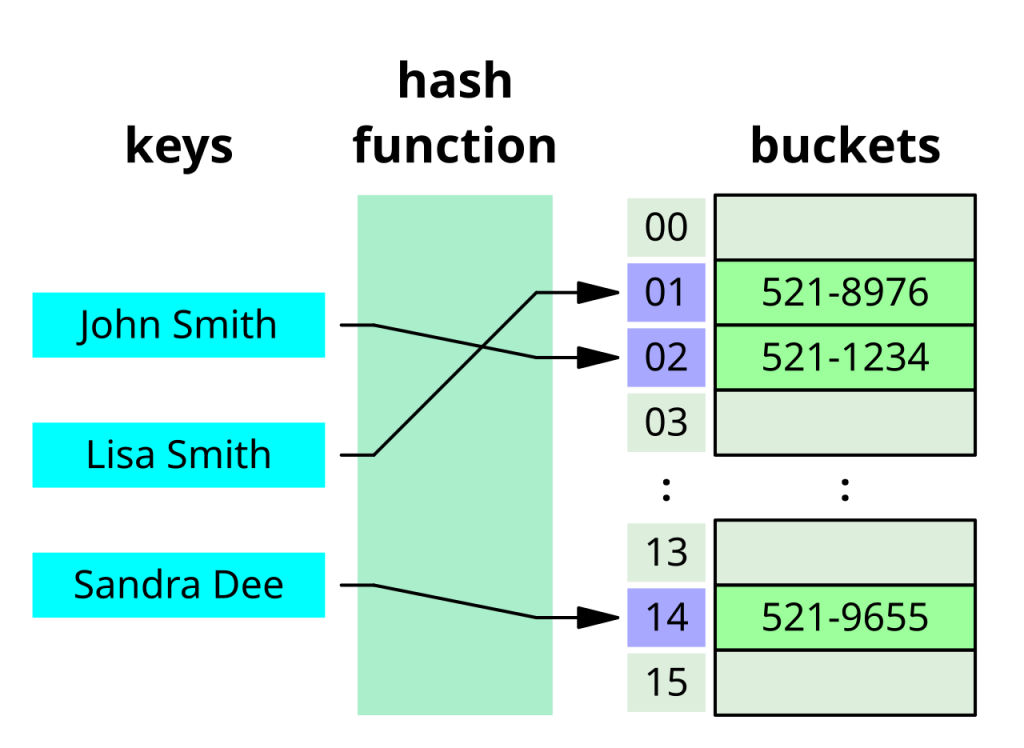
A search algorithm is a foundational computational procedure designed to retrieve a record, element, or path matching specified criteria within a structured data store or state space. In modern distributed systems and high-throughput software engineering, search ranges from exact lookups in sorted contiguous memory to approximate nearest neighbor (ANN) retrieval in high-dimensional vector spaces, operating under strict latency, memory bandwidth, and caching constraints.
HOW-TO IMPLEMENT & CONFIGURE
- Modern C++ compiler supporting C++20 (GCC 11+, Clang 13+, MSVC 2019+)
- CMake 3.20 or newer build system
- Google Test (GTest) framework for rigorous unit validation
- Linux perf or Valgrind for memory profiling and cache-miss analysis
Step 1
cmake_minimum_required(VERSION 3.20)
project(SearchEngineOptimization CXX)

set(CMAKE_CXX_STANDARD 20)
set(CMAKE_CXX_STANDARD_REQUIRED ON)

add_compile_options(-Wall -Wextra -Werror -O3 -march=native)

add_library(search_lib src/binary_search.cpp)
add_executable(search_tests tests/search_test.cpp)
target_link_libraries(search_tests PRIVATE search_lib gtest_main)
Step 2
#include <div>
#include <concepts>
#include <iterator>

namespace dixl::algorithms {

template<typename T>
requires std::totally_ordered<T>
[[nodiscard]] constexpr auto branch_reduced_binary_search(std::span<const T> data, const T& target) noexcept -> const T* {
    const T* base = data.data();
    size_t length = data.size();

    while (length > 1) {
        size_t half = length / 2;
        // Prefetch hint or conditional branch reduction
        base = (base[half] <= target) ? base + half : base;
        length -= half;
    }

    return (*base == target) ? base : nullptr;
}

} // namespace dixl::algorithms
Step 3
#include <gtest/gtest.h>
#include <span>
#include <vector>

namespace dixl::algorithms {
    template<typename T>
    [[nodiscard]] constexpr auto branch_reduced_binary_search(std::span<const T> data, const T& target) noexcept -> const T*;
}

TEST(BinarySearchTest, HandlesEmptyAndSingleElement) {
    std::vector<int> empty;
    EXPECT_EQ(dixl::algorithms::branch_reduced_binary_search(std::span{empty}, 5), nullptr);

    std::vector<int> single{42};
    EXPECT_NE(dixl::algorithms::branch_reduced_binary_search(std::span{single}, 42), nullptr);
    EXPECT_EQ(dixl::algorithms::branch_reduced_binary_search(std::span{single}, 10), nullptr);
}

TEST(BinarySearchTest, LocatesElementsInLargeDataset) {
    std::vector<int> data(1000000);
    for(int i = 0; i < 1000000; ++i) data[i] = i * 2;

    const int* res = dixl::algorithms::branch_reduced_binary_search(std::span{data}, 500000);
    ASSERT_NE(res, nullptr);
    EXPECT_EQ(*res, 500000);
}
Step 4
// Mitigation of integer overflow via unsigned midpoint addition
[[nodiscard]] constexpr size_t safe_midpoint(size_t left, size_t right) noexcept {
    return left + (right - left) / 2;
}
Mathematical Formulation & Complexity Bounds
Search algorithms are formally evaluated based on their operational query bounds against state spaces of size n. Exact match algorithms over ordered sequences, such as Binary Search, partition the domain into two subsets at each step, yielding the recurrence relation T(n) = T(n/2) + O(1). By the Master Theorem, this resolves to O(log n) time complexity. Space complexity is O(1) auxiliary when implemented iteratively. In contrast, unstructured sequential searches require O(n) inspections. Graph-based state space searches (e.g., A*, Dijkstra) evaluate state trees with branching factor b and depth d, yielding O(b^d) time and memory footprints unless pruned by admissible heuristics.
Memory Subsystem Interaction & Cache Locality
Modern CPU architecture performance is bounded by memory latency rather than raw instruction throughput. Binary search jumps across memory addresses separated by powers of two, frequently triggering L3 cache misses and Translation Lookaside Buffer (TLB) thrashing for large arrays. Production-grade systems mitigate this by employing B-trees with node sizes aligned to CPU cache line boundaries (typically 64 bytes), or by utilizing blocked search layouts (e.g., Eytzinger layout / cache-oblivious search trees) that guarantee sequential traversal patterns for higher cache hit rates.
Distributed and Approximate Extensions
When datasets exceed single-node memory capacity, search algorithms transition to distributed paradigms (e.g., MapReduce inverted indexes, distributed hash rings) and approximate formulations. Approximate Nearest Neighbor (ANN) search algorithms—such as Hierarchical Navigable Small World (HNSW) graphs and Product Quantization (PQ)—trade absolute recall precision for sub-linear query latencies (O(log n) or better) across high-dimensional vector embeddings, forming the backbone of modern semantic retrieval engines and LLM RAG pipelines.
📚 STANDARDS & ACADEMIC RFC CITATIONS
- Knuth, D. E. (1998). The Art of Computer Programming, Volume 3: Sorting and Searching (2nd ed.). Addison-Wesley.
- Cormen, T. H., Leiserson, C. E., Rivest, R. L., & Stein, C. (2009). Introduction to Algorithms (3rd ed.). MIT Press.
- Brodal, G. S., Fagerberg, R., & Jacob, R. (2002). Cache-Oblivious Search Trees. SIAM Journal on Computing.